Dehydration in Pets: Early Symptoms and Fast Action Steps for Owners
Caution: Dehydration can become life-threatening quickly, especially in puppies, kittens, seniors, brachycephalic breeds, and pets with vomiting, diarrhea, or chronic disease. If your pet is weak, collapses, cannot keep water down, has very dry gums, sunken eyes, or has not urinated in 12+ hours, contact a veterinarian or emergency clinic immediately.
Why Dehydration Demands Fast Action
Water drives every crucial body function in dogs and cats—temperature control, circulation, organ filtration, digestion, and joint and brain health. When fluids drop, the heart and kidneys work harder, body temperature rises, and toxins concentrate. Left unchecked, dehydration triggers shock, kidney injury, and dangerous electrolyte imbalances. Recognizing pet illness symptoms early and acting fast prevents complications and shortens recovery.
Early Dehydration Symptoms You Can Spot at Home
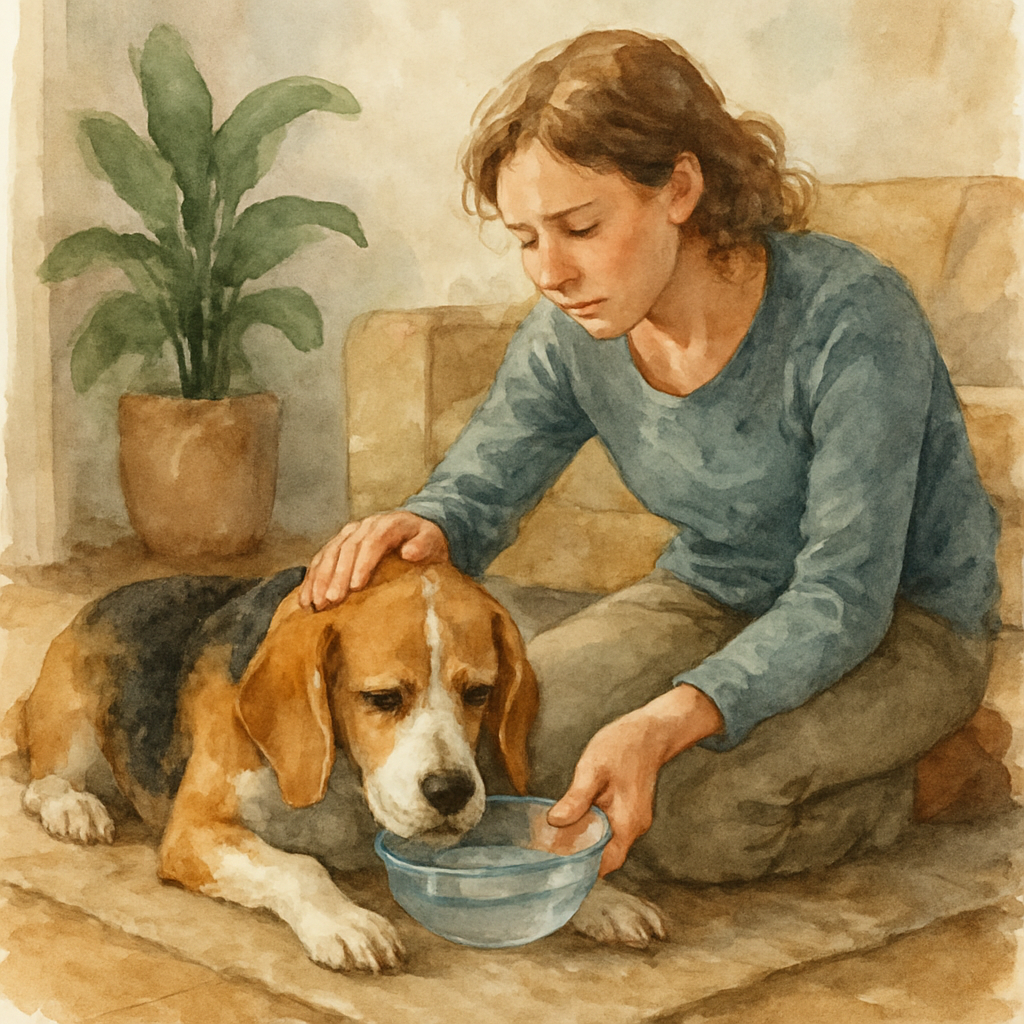
These signs often appear in the first 12–24 hours of fluid loss. Catching them early is the easiest way to correct dehydration and uncover the cause.
1) Subtle behavior and energy changes
- Lethargy in dogs and cats: less interest in walks, play, or exploring; sleeping more; reluctance to get up.
- Irritability, restlessness, or panting
2) Mouth and gum checks
- Dry or tacky gums instead of slick and moist.
- Thick ropey saliva or smacking/licking lips.
- Pale gums may signal poor circulation or anemia and require urgent vet care, especially if paired with pet fever symptoms (hot ears, warm belly, shivering).
3) Skin elasticity (“skin tent”) changes
- Gently lift a small fold of skin over the shoulders and release.
- Normal: skin snaps back immediately.
- Mild dehydration: returns a bit slowly.
- Moderate–severe: remains tented or very slow to flatten—this is a red flag.
- Note: This test is less reliable in obese, very thin, or elderly pets and some breeds with loose skin; always combine with other signs.
4) Urine and litter box clues
- Darker yellow urine, strong odor, small amounts, or straining.
- Fewer clumps in the litter box or no clumps at all (cats).
- Any urinary problems in pets like painful urination, blood, or going frequently with only drops requires prompt vet evaluation.
5) Eyes, nose, and coat
- Sunken or dull-looking eyes.
- Dry nose or crusting, especially with reduced tear film.
- Coat appears flaky and unkempt; dandruff may increase as skin dehydrates.
6) Heart and breathing changes
- Faster heart rate and breathing even at rest.
- Panting in dogs at rest in a cool room can signal dehydration, pain, heat stress, or pet fever symptoms.
Quick red flags (go to the vet now)
- Vomiting or diarrhea for more than 6–12 hours, or any blood present.
- Cannot keep water down or refuses all fluids.
- Gums very dry or tacky, capillary refill (gum blanch test) > 2 seconds, or pale/gray/blue gums.
- Collapse, confusion, or severe weakness.
- No urine produced for 12+ hours, or painful urination with distress.
- Heat exposure, especially in brachycephalic breeds (pugs, bulldogs, Persians) or overweight pets.
Fast Action Steps: What to Do Immediately at Home
Use these first-aid steps while you arrange veterinary care if needed. If your pet has ongoing vomiting, is very weak, or you suspect heatstroke, skip oral fluids and go straight to the vet.
Step 1: Move to a calm, cool environment
- Provide shade and air circulation; use a fan if available.
- For heat exposure, cool gradually: damp towels on the abdomen/inner thighs and offer small sips of cool (not ice-cold) water.
Step 2: Offer small, frequent amounts of fluid
- Use fresh cool water. For cats, try a fountain or shallow dish; add tuna-water (from tuna packed in water, no salt) for enticement.
- Consider a pet-formulated oral rehydration/electrolyte solution; avoid human sports drinks (some contain xylitol, dangerous to pets).
- Offer small sips every 5–10 minutes. As a general guide for mild dehydration without vomiting, up to about 5–10 mL per kilogram body weight per hour orally can be safe; do not force. Stop if nausea or vomiting occurs.
- Ice cubes or frozen low-sodium broth pops may be more acceptable to reluctant drinkers (cats especially).
Step 3: Check gums and capillary refill
- Press your fingertip to the gum until it blanches white, then release; color should return in under 2 seconds. Slower refill suggests poor circulation—seek veterinary care.
Step 4: Record what you see
- Note onset time of symptoms, vomiting/diarrhea episodes, appetite, and water intake.
- Bring a list of medications, recent diet changes, and any toxin or heat exposure concerns to the vet.
Step 5: Withhold food if vomiting is active
- Once vomiting stops for 6–8 hours and the vet approves, reintroduce a bland diet gradually (boiled chicken and rice for dogs; vet-approved gastrointestinal diet for dogs or cats).
Do not: force water with a syringe (risk of aspiration), give salt water, or use flavored human drinks. Never delay veterinary care while “seeing if it passes” if your pet is getting weaker or you spot red flags.
When to Take Your Pet to the Vet
Use this triage guide to match urgency with action.
- Immediate emergency: continuous vomiting/diarrhea, heatstroke signs, collapse, very dry/pale gums, inability to keep water down, known toxin exposure, or no urine production—go to an emergency clinic now.
- Same day: moderate dehydration signs (skin tenting, sunken eyes), lethargy, fever, painful urination, blood in stool/urine, or if your pet is very young, old, diabetic, has kidney disease, or is a brachycephalic breed.
- Within 24 hours: mild decreased drinking, tacky gums, reduced appetite, or mild diarrhea without blood and no other red flags.
What Your Vet May Do: Diagnosis and Treatment
Expect a focused exam to determine severity, plus tests to find the cause behind the dehydration.
- Physical exam: heart rate, temperature, gum moisture/color, skin turgor, body weight, abdominal palpation, pain assessment.
- Laboratory tests: packed cell volume/total solids, electrolytes (sodium, potassium, chloride), kidney values (BUN/creatinine), glucose, urinalysis (concentration, infection signs), fecal parasite screening.
- Imaging: abdominal ultrasound or X-ray if obstruction, organ disease, or urinary blockage is suspected.
- Treatment: subcutaneous fluids for mild cases; intravenous fluids for moderate to severe dehydration or ongoing losses; anti-nausea meds, GI protectants, antibiotics if infection, pain relief, temperature management, and specific therapy for the cause (e.g., treating parasites in pets symptoms, urinary blockage, or pancreatitis).
Common Causes of Dehydration and Related Pet Illness Symptoms
Dehydration is often a symptom, not the whole problem. These conditions commonly trigger fluid loss or reduced intake:
Gastrointestinal problems
- Vomiting and diarrhea: food indiscretion, sudden diet change, GI infections, pancreatitis, toxin ingestion.
- Loss of appetite in pets: pain, nausea, stress, dental disease all reduce water intake, particularly in cats.
- Weight loss in pets causes: chronic GI disease, parasites, diabetes, hyperthyroidism (cats), cancer—these may cause both poor intake and increased water needs.
Urinary and endocrine conditions
- Urinary problems in pets: infections cause frequent urination and thirst; urinary blockages (common in male cats) quickly become emergencies with no urine output, pain, and vomiting.
- Kidney disease: excessive urination leads to dehydration if the pet can’t keep up drinking.
- Diabetes: high blood sugar triggers excess urine production and thirst; dehydration can develop quickly if intake lags behind losses.
Infections and fevers
- Pet fever symptoms (warm ears/belly, shivering, lethargy, not eating) increase fluid loss through panting and sweating through paw pads (dogs). Fever also suppresses appetite, compounding dehydration.
- Ear infection symptoms in pets: head shaking, ear odor, redness, discharge, pain, scratching. Pain and stress can reduce drinking; severe infections can cause fever and contribute to fluid deficits.
Parasites and skin disease
- Parasites in pets symptoms: diarrhea, vomiting, weight loss, poor coat, potbelly in young animals—these increase fluid loss.
- Itching and scratching causes in pets: fleas, mites, allergies, skin infections. While skin disease doesn’t directly dehydrate, secondary infection or stress-related poor intake can.
Heat and environmental factors
- Exercise or hot weather increases water needs; panting (dogs) and grooming (cats) escalate losses.
- Travel and boarding changes routine and reduce drinking; fountains and familiar bowls help.
Special Risk Groups and How to Adjust Care
- Puppies and kittens: small fluid reserves; dehydration progresses rapidly. Any vomiting/diarrhea warrants a same-day vet visit.
- Seniors: often have reduced thirst response and underlying disease (kidney, thyroid, dental). Monitor intake and litter box/urine output daily.
- Brachycephalic breeds: overheat faster and pant less effectively; prioritize cooling and frequent water breaks.
- Chronic disease (kidney, diabetes, heart): require tailored hydration plans under veterinary guidance.
How Much Water Do Pets Need Each Day?
General daily maintenance water needs (including moisture from food):
- Dogs and cats: about 50–60 mL per kilogram of body weight per day (some need up to 70 mL/kg, especially in heat or with high activity).
- Pets on wet food may drink less from the bowl because their diet provides moisture.
Example: A 10 kg (22 lb) dog typically needs ~500–600 mL/day total water. A 4 kg (9 lb) cat needs ~200–240 mL/day, including moisture in food.
Note: These are averages. Illness, temperature, exercise, lactation, and diet can significantly change needs. If you’re unsure, ask your vet—especially if your pet has heart or kidney disease where fluid intake may need careful control.
Safe Oral Rehydration: Practical Tips
- Offer small, frequent sips rather than large volumes at once to reduce nausea and vomiting risk.
- Use pet-specific electrolyte solutions if recommended by your vet; avoid products with artificial sweeteners (xylitol is toxic).
- Flavor water to encourage drinking: low-sodium chicken broth (diluted 1:1 with water), tuna-water for cats, or a few kibbles soaked in water.
- Multiple bowls and a pet fountain can improve intake; keep bowls clean and water fresh.
- If your vet has taught you to give subcutaneous fluids for a chronic condition, follow the prescribed schedule and volume exactly; never self-start without veterinary instruction.
Home Monitoring Checklist (Printable)
Use this daily for any pet recovering from dehydration or showing mild pet illness symptoms.
- Gums: moist/slippery or tacky?
- Skin tent: snaps back quickly or slow?
- Eyes: bright or sunken/dull?
- Water intake: note approximate amounts. Mark bowl levels morning and evening.
- Urination: number of trips/clumps, color, any straining or accidents.
- Stool: normal, soft, diarrhea, or any blood/mucus.
- Appetite: normal, reduced, or refused.
- Energy: playful/normal vs lethargic.
- Weight: weigh small pets/cats every 1–3 days; sudden losses are concerning.
- Medications: given on time, any side effects?
Prevention: Keep Your Pet Hydrated Every Day
- Make water appealing: clean bowls daily; try ceramic/stainless; add a fountain for cats or picky drinkers.
- Diet moisture: mix wet food into meals or add water to dry food gradually.
- Heat and activity plan: schedule walks/exercise in cooler hours; carry a collapsible bowl; offer water breaks every 15–20 minutes.
- Travel smart: bring familiar bowls and water from home to prevent refusal; stick to routine as much as possible.
- Parasite control: year-round prevention reduces diarrhea and blood loss risks that cause dehydration.
- Dental care: painful mouths reduce drinking; maintain professional cleanings and daily home care.
- Early vet checks: sudden increases or decreases in thirst, new urinary issues, or ongoing lethargy or weight loss warrant evaluation.
Myths and Mistakes to Avoid
- Myth: “If the nose is wet, my pet is hydrated.” Wet noses can occur even in dehydrated pets; check gums and behavior instead.
- Mistake: Giving large bowls all at once after strenuous play. Better: small frequent sips to avoid vomiting.
- Mistake: Using human sports drinks. Some contain xylitol and inappropriate electrolytes for pets.
- Myth: “Cats naturally drink little; it’s fine if my cat rarely drinks.” Many cats are borderline dehydrated on dry food; encourage moisture intake.
- Mistake: Waiting overnight with ongoing vomiting/diarrhea in puppies, kittens, or seniors. Seek same-day care.
How Dehydration Interacts with Other Common Pet Illness Symptoms
Dehydration often appears alongside other warning signs. Knowing these pairings speeds diagnosis and recovery:
- Lethargy in dogs and cats + loss of appetite in pets: may reflect fever, pain, GI upset, or systemic illness—risk of rapid dehydration.
- Urinary problems in pets + frequent drinking/peeing: consider urinary tract infection, diabetes, or kidney disease; dehydration can still occur if water intake cannot match losses.
- Itching and scratching causes in pets + skin infection: secondary infections can produce fever and anorexia, lowering fluid intake.
- Ear infection symptoms in pets + fever: pain and systemic infection reduce drinking; monitor closely and treat promptly.
- Weight loss in pets causes: chronic diseases drain reserves; even a day of vomiting/diarrhea can trigger serious dehydration.
What to Tell Your Vet (Speeds Care)
- Onset and progression: when you first noticed signs, whether they’re getting worse or better.
- Exact symptoms: vomiting (how many times, what it looked like), diarrhea (consistency, blood/mucus), urine changes, appetite, energy level.
- Water intake: rough amounts, changes from baseline, refusal to drink.
- Risk factors: heat exposure, recent hikes/travel, diet changes, new treats, toxins/medications, known diseases.
- Home checks: gum moisture, skin tent, temperature if you’ve taken it, capillary refill time.
Frequently Asked Questions
How can I quickly tell if my pet is dehydrated?
Check gum moisture (should be slick), perform a gentle skin tent over the shoulders (should snap back fast), and look at urine output and color. Lethargy and sunken eyes add concern. One sign alone isn’t definitive—consider the whole picture and contact your vet if unsure.
Can I give my pet an electrolyte drink?
Use only pet-formulated oral rehydration solutions or your vet’s recommendation. Avoid human sports drinks—some contain xylitol and unsuitable electrolytes. If vomiting continues, skip oral fluids and seek veterinary care.
How much should my dog or cat drink per day?
About 50–60 mL per kilogram of body weight daily, including moisture in food. Needs increase with heat, exercise, fever, or illness.
Is dry nose always a sign of dehydration?
No. Nose moisture varies with sleep, humidity, and grooming. Gum moisture, urine output, and behavior are more reliable indicators.
What if my cat won’t drink?
Offer a fountain, wide shallow bowls, fresh water multiple times a day, and wet food. Add a tablespoon of water to meals, or a splash of tuna-water. If your cat still refuses and shows lethargy, vomiting, or decreased urination, call your vet.
When is it unsafe to give fluids by mouth at home?
If your pet is vomiting repeatedly, extremely weak, has neurologic signs, or might have a blockage or urinary obstruction. Oral fluids can worsen vomiting or be aspirated. Seek immediate veterinary care.
Can parasites or ear infections really cause dehydration?
Yes. Parasites in pets symptoms often include diarrhea and vomiting that rapidly dehydrate. Painful infections, including ear infection symptoms in pets, can suppress appetite and water intake; systemic infection can add fever and fluid loss.
Bottom Line
Dehydration is a common, serious outcome of many pet illness symptoms, from GI upsets and infections to urinary and endocrine disease. Spot early signs—tacky gums, reduced urine, lethargy, sunken eyes—and act fast with small frequent fluids, cooling, and prompt veterinary guidance. When in doubt, call your vet; quick treatment prevents complications and keeps dogs and cats on the path to safe recovery.