Category: Pet First Aid
Pet First Aid: The Essential Emergency Guide Every Pet Parent Should Read
Pet First Aid: The Essential Emergency Guide Every Pet Parent Should Read
Minutes matter in a pet emergency. This practical pet first aid guide gives you clear, step-by-step actions for the most common crises, from bleeding and choking to heatstroke, seizures, and poisoning. Save or print it, keep a kit nearby, and rehearse key skills—your preparation can protect your pet when every second counts.
Important Caution
This article provides general pet first aid guidance and is not a substitute for professional veterinary care. If your pet is in distress, bleeding heavily, has trouble breathing, is unresponsive, was exposed to toxins, or you are unsure what to do, contact your veterinarian or the nearest emergency animal hospital immediately. For poison concerns, contact a pet poison control service right away (fees may apply). If you suspect a life-threatening emergency, transport your pet to a veterinary hospital as soon as safely possible.
Quick-Start: The 10-Second Triage
When something goes wrong, start here to stabilize and decide next steps.
- Ensure scene safety: Remove hazards (traffic, electrical cords, aggressive animals). Secure other pets and bystanders.
- Check responsiveness: Say your pet’s name, clap, gently touch. If unresponsive, proceed to ABCs immediately.
- Airway: Open the mouth, look for obstructions; sweep only if you see a loose object you can safely remove.
- Breathing: Look, listen, and feel for breaths. If not breathing, begin rescue breathing.
- Circulation: Check for a heartbeat/pulse (inside thigh—femoral artery) and gum color. If no heartbeat, begin CPR.
- Stop major bleeding: Apply firm direct pressure with clean cloth/gauze; elevate limb if appropriate.
- Call the vet: Describe symptoms, what happened, your location, and ETA. Follow their instructions.
- Prepare transport: Use a carrier, blanket, or board. Keep your pet warm (unless heatstroke) and calm.
How to Check Your Pet’s Vital Signs
Knowing normal baselines speeds decision-making in an emergency. Practice when your pet is healthy.
- Heart rate (resting):
- Dogs: 60–120 beats per minute (small dogs often faster; large dogs often slower)
- Cats: 140–220 beats per minute
- Respiratory rate (resting, not panting):
- Dogs: 10–30 breaths per minute
- Cats: 20–30 breaths per minute
- Temperature (rectal): 100.0–102.5°F (37.8–39.2°C) for most dogs and cats
- Gum color: Healthy is bubble-gum pink; pale/white, blue/gray, or bright red is an emergency sign
- Capillary refill time (CRT): Press a gum briefly; color should return within 1–2 seconds
How to take a pulse: Place two fingers on the inside of the hind leg where it meets the body (femoral artery). Count beats for 15 seconds and multiply by 4.
Practice tip: Write your pet’s normal vitals on a fridge card with your vet’s number.
Essential Pet First Aid Kit (Home, Car, and Go-Bag)
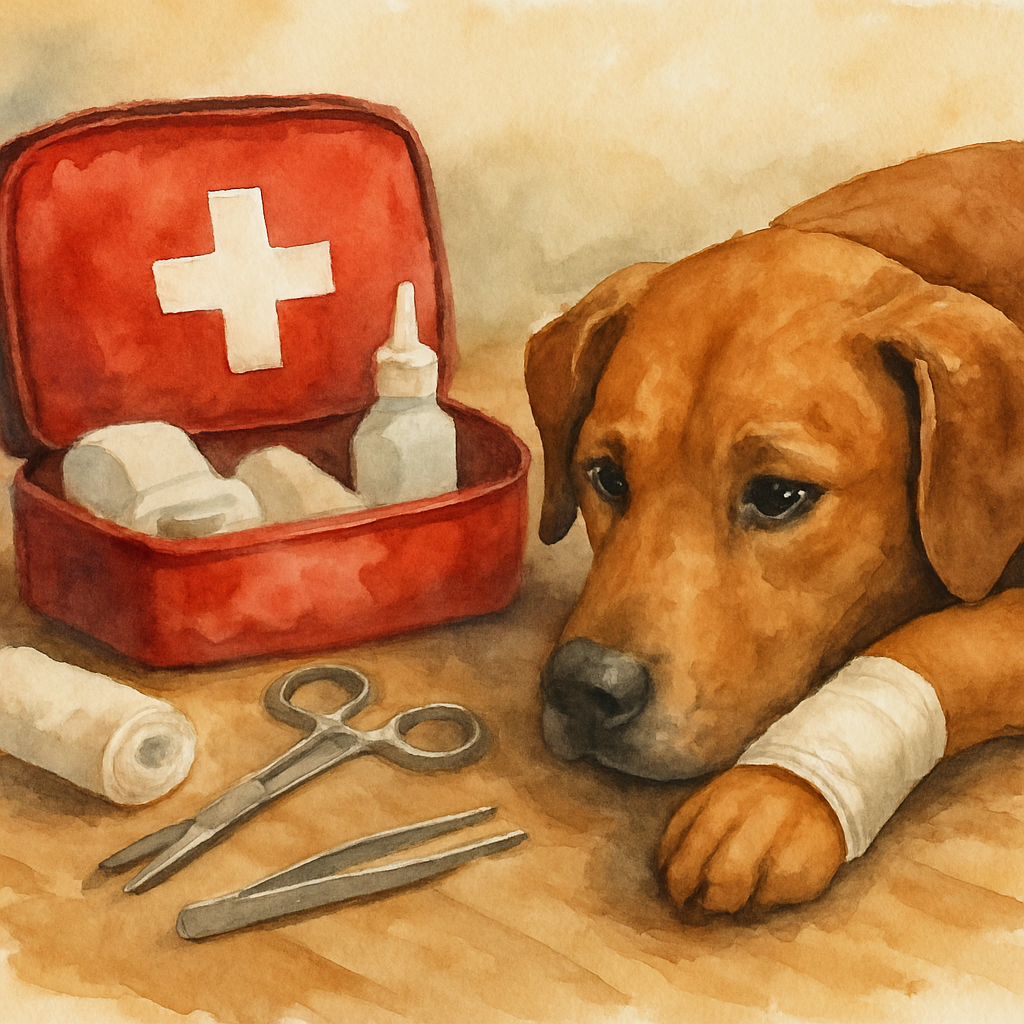
Build a kit you can grab fast. Refresh it every 6 months and replace expired items.
- Identification and info:
- Emergency contacts (primary vet, 24/7 emergency hospital), address, directions
- Pet profile: photo, microchip number, weight, medications, allergies, vaccination status
- Basic supplies:
- Gauze pads and rolls, non-stick sterile pads, cotton balls
- Self-adhesive wrap (VetWrap), adhesive tape, triangular bandage
- Clean towels, washcloths, blanket, plastic bags
- Saline eye wash (sterile), sterile saline for wound flushing
- Digital thermometer (rectal) and water-based lubricant
- Scissors with blunt tip, tweezers, tick remover
- Muzzle or soft cloth for improvised muzzle (never for brachycephalics or pets in respiratory distress)
- Splinting materials: padded sticks, tongue depressors (for small pets), foam
- Instant cold packs and chemical heat packs (wrap in cloth before applying)
- Disposable gloves, flashlight, headlamp
- CPR face shield designed for pets (optional but useful)
- Cleaning and wound care:
- Chlorhexidine or povidone-iodine solution for dilute skin cleaning (never in eyes or deep wounds)
- Clipper or safety razor for hair around wounds (optional)
- Medications and tools (use only with veterinary guidance):
- 3% hydrogen peroxide (dogs only, to induce vomiting only if a vet says it’s safe)
- Activated charcoal (use only if directed by a vet)
- Syringes (without needles) for dosing/flushes
- Honey or corn syrup (for suspected hypoglycemia while awaiting vet advice)
Do not give human pain relievers (ibuprofen, acetaminophen, aspirin) unless specifically prescribed. Many are toxic to pets, especially cats.
Handling and Restraint: Keep Everyone Safe
Even gentle pets may bite or scratch when scared or hurting. Use calm, slow movements. Avoid hugging an injured pet tightly—this can worsen pain or injury.
- Use a muzzle for dogs in pain, unless they’re vomiting, having trouble breathing, or overheated. For short-nosed breeds, use a specially designed muzzle—do not restrict airflow.
- For cats, wrap in a large towel like a “kitty burrito” with the head exposed. Place into a secure carrier for transport.
- Support the spine and injured limbs; slide onto a board, baking sheet, or sturdy blanket.
- Speak softly. Keep lights low and noise minimal to reduce stress.
Common Pet Emergencies and What To Do
Severe Bleeding and Wounds
What you see: Spurting or pooling blood, lacerations, punctures, torn nails.
What to do now:
- Apply firm, direct pressure with sterile gauze or a clean cloth for at least 5–10 minutes. Do not peek—continuous pressure is key.
- Elevate the limb if feasible and safe.
- If blood soaks through, add more layers; don’t remove the original pad.
- For a torn/degloved nail: apply pressure; a styptic powder or cornstarch can help minor nail bleeds.
- Do not use a tourniquet unless trained; improper use can cause severe damage.
- Cover with a clean dressing and transport to the vet. Puncture wounds and bites often need antibiotics.
Red flags: Pale gums, weakness, rapid breathing, or ongoing blood loss—treat as an emergency.
Choking and Airway Blockage
What you see: Pawing at mouth, gagging, distress, cyanotic (blue) gums, collapse.
- If your pet can cough or breathe, keep them calm and let them attempt to clear it—do not interfere aggressively.
- If not breathing or severely distressed: open the mouth and look. If you see a loose object, carefully remove it. Do not blindly sweep with fingers—risk of pushing it deeper or being bitten.
- Heimlich-style aid (use caution):
- Small dogs/cats: Place the pet on their side and give 5 quick chest compressions over the ribcage just behind the front legs; recheck the mouth.
- Medium/large dogs (standing): Place your arms around the belly just behind the last rib and give 5 quick inward-and-upward thrusts; recheck the mouth.
- Unconscious pets: Begin rescue breathing and chest compressions if no pulse; recheck the mouth every 30 seconds.
- Even if the object is expelled, see a vet—airway swelling or injury is common.
Heatstroke (Overheating)
What you see: Heavy panting, drooling, bright red or pale gums, vomiting/diarrhea, confusion, collapse. High risk in hot/humid weather, cars, exercise, and brachycephalic breeds.
- Move to shade/air conditioning immediately.
- Begin active cooling: wet your pet with cool (not ice-cold) water, especially groin, armpits, and paws. Use a fan.
- Offer small sips of cool water if fully conscious.
- Stop cooling when rectal temp reaches 103°F and transport to the vet right away—organ damage can occur even if they seem improved.
- Do not use ice baths or cover with wet towels that trap heat.
Hypothermia and Frostbite
What you see: Shivering, lethargy, stiff muscles, pale/blue extremities (ears, tail, paws), slow heart rate.
- Move to a warm, dry environment. Handle gently—cold tissues are fragile.
- Warm gradually with blankets and body heat. Use warm water bottles wrapped in towels near (not on) the body.
- Do not use direct heat (heating pads on skin, hair dryers).
- Offer warm (not hot) fluids only if fully alert.
- Frostbite: Do not rub or massage. Warm the area with lukewarm water compresses and seek veterinary care.
Poisoning and Toxins
Common culprits: Chocolate, xylitol (sugar-free products), grapes/raisins, onions/garlic, human medications (NSAIDs, antidepressants, ADHD meds), marijuana edibles, rodenticide, antifreeze, household cleaners, plants (lilies in cats), and essential oils (cats are especially sensitive).
- Act fast: Note what, when, and how much was ingested; keep the packaging.
- Call your vet or a poison control service immediately. Do not induce vomiting unless a professional instructs you—some toxins and situations make vomiting dangerous.
- Hydrogen peroxide 3% can induce vomiting in dogs only and only with veterinary approval; never for cats.
- Do not give milk, activated charcoal, or food unless advised.
- If skin exposure, rinse with lukewarm water and pet-safe shampoo; avoid eyes and ears.
Emergency signs: Tremors, seizures, vomiting/diarrhea, drooling, collapse, pale/blue gums, abnormal bleeding—seek immediate veterinary care.
Seizures
What you see: Sudden collapse, paddling, drooling, loss of consciousness, urination/defecation.
- Time the seizure. Most last 1–3 minutes. Clear the area of hazards. Do not restrain or put anything in the mouth.
- Dim lights, reduce noise. After the seizure (post-ictal), keep your pet calm and safe.
- Cool with a fan if overheating. Check temperature once it’s safe.
- Call your vet after any first-time or prolonged seizure. Multiple seizures in 24 hours or a seizure lasting over 5 minutes is an emergency.
Burns (Thermal, Chemical, Electrical)
- Thermal: Cool the area under cool running water for 10–20 minutes. Do not apply ice, butter, or ointments. Cover with a non-stick dressing and seek veterinary care.
- Chemical: Flush with plenty of lukewarm water for 15–20 minutes, avoiding eyes unless it’s an eye exposure (use sterile eyewash then see a vet immediately).
- Electrical (chewed cords): Switch off power first. Burns in the mouth and potential lung injury are common—see a vet even if your pet seems okay.
Fractures, Sprains, and Spinal Injury
What you see: Non-weight-bearing limb, swelling, unnatural limb position, pain, paralysis after trauma.
- Muzzle if safe. Minimize movement and support the body on a flat surface.
- Do not attempt to straighten a limb. Splint only if trained and only to prevent further damage during transport.
- Check toes for warmth and color if bandaged; loosen if swelling or coldness occurs.
- Spinal injury suspected (fall, car hit, hind-limb paralysis): Keep the spine aligned; slide onto a board and secure for transport. Immediate veterinary care is critical.
Eye Injuries
What you see: Squinting, redness, discharge, visible foreign body, bulging eye, bleeding, or chemical exposure.
- Prevent rubbing by using an Elizabethan collar if available.
- Flush gently with sterile saline if something is visible on the surface.
- Do not apply ointments unless prescribed. Do not exert pressure on the eye.
- Urgent vet care is needed for any eye trauma or sudden vision change.
Bites, Stings, and Allergic Reactions
What you see: Local swelling, redness, pain; or systemic signs: hives, facial swelling, vomiting, diarrhea, collapse.
- Remove a bee stinger by scraping with a card (don’t pinch; it squeezes more venom).
- Apply a cold compress 10 minutes on/10 minutes off.
- Watch closely for progression. Facial swelling, hives, trouble breathing, or weakness indicate possible anaphylaxis—go to the vet immediately.
- Ask your vet before giving any antihistamines; dosing varies and some formulations are unsafe for pets.
Bloat/GDV (Gastric Dilatation-Volvulus) in Dogs
High-risk breeds: Large, deep-chested dogs (e.g., Great Danes, German Shepherds). Signs: Distended, tight abdomen; unproductive retching; restlessness; drooling; collapse.
- This is a surgical emergency. Do not wait. Transport to a vet immediately.
- Do not offer food or water. Minimize movement.
Dystocia (Trouble Giving Birth)
Warning signs:
- Strong contractions for 30–60 minutes without a puppy/kitten
- More than 2 hours between offspring with ongoing contractions
- Green/black discharge before the first pup/kitten
- Obvious stuck fetus, extreme distress, or exhaustion
Seek immediate veterinary help.
Smoke Inhalation and House Fires
- Move to fresh air immediately. Keep warm and calm.
- Even if your pet seems okay, inhalation injuries can worsen—see a vet for oxygen and monitoring.
Drowning or Submersion
- Remove from water and hold with head slightly lower than chest to allow drainage.
- Clear the mouth if safe. Begin rescue breathing/CPR if needed.
- Keep warm and transport to a vet—secondary complications are common.
Pet CPR and Rescue Breathing (Dogs and Cats)
Only begin CPR if your pet is unresponsive, not breathing, and you cannot detect a heartbeat or pulse. If possible, have one person call the vet while another starts CPR.
- Position:
- Most dogs and cats: Lay on right side on a firm surface.
- Barrel-chested dogs (e.g., Bulldogs): Lay on back and compress the sternum.
- Chest compressions:
- Large/medium dogs: Place hands over the widest part of the chest. Compress 1/3 to 1/2 chest depth, 100–120 compressions per minute.
- Cats and small dogs: Use one hand to compress over the heart (just behind the left elbow) or two fingers for tiny pets. Aim for 100–120 per minute, 1/3 to 1/2 chest depth.
- Rescue breaths:
- Extend the neck gently. Close the mouth. Seal your mouth over the nose (over both nose and mouth for small pets) and give a breath just until the chest rises. Avoid over-inflation.
- Target about 10 breaths per minute (one every 6 seconds) during CPR.
- Compression-to-breath ratio (solo rescuer): 30 compressions, then 2 breaths; repeat.
- Reassess every 2 minutes for a pulse and spontaneous breathing.
- Continue until the vet takes over or your pet recovers. If possible, perform CPR while transporting to the vet.
Note: Success rates are limited without immediate veterinary support, but prompt, correct technique gives the best chance.
Bandaging Basics and Splinting
Bandages protect wounds, control bleeding, and limit movement. Apply only as snug as needed; too tight restricts blood flow.
- Clean: Clip hair around the wound if possible. Flush with sterile saline. Avoid harsh scrubbing.
- Dress: Place a non-stick sterile pad over the wound.
- Wrap: Use gauze roll with moderate tension; overlap by half. Then apply self-adhesive wrap lightly.
- Check: Leave two toes visible to monitor swelling and warmth. Slide two fingers under the bandage—should be snug but not tight.
- Change: Replace if wet, dirty, or slipping; otherwise as directed by your vet (often daily at first).
Splinting tips (only if trained or if transport requires stabilization):
- Pad the limb. Place a rigid support along the limb’s sides. Secure with gauze and self-adhesive wrap. Do not cover too tightly or twist the limb.
- Check circulation frequently; loosen if toes become cold, swollen, or discolored.
Safe Transport to the Vet
- Call ahead so the clinic can prepare.
- Use a carrier for cats and small dogs; cover with a towel to reduce stress. For larger pets, a board or sturdy blanket can serve as a stretcher.
- Keep your pet warm with blankets unless heatstroke is suspected. In heatstroke, continue gentle cooling and airflow.
- Drive smoothly, avoid sudden stops, and have a second person monitor your pet if possible.
Aftercare: Monitoring and Recovery
Post-emergency, follow your vet’s instructions precisely. Keep a calm, clean environment and limit activity as directed.
- Track vitals twice daily (temperature, heart and respiratory rates) unless told otherwise.
- Watch for red flags: reduced appetite, vomiting/diarrhea, lethargy, labored breathing, pale gums, swelling near bandages, discharge, odor, or fever (over 102.5°F).
- Prevent licking/chewing of wounds with an Elizabethan collar or recovery suit.
- Give medications exactly on schedule; do not skip antibiotics or pain meds.
- Rechecks: Keep all follow-up appointments, suture removals, and bandage changes.
Prevention: Everyday Habits That Reduce Emergencies
- Pet-proof your home: keep trash sealed; secure medications, cleaning products, and rodenticides; store foods like xylitol gum, chocolate, grapes/raisins out of reach.
- Plant safety: Remove toxic plants (e.g., lilies for cats).
- Climate safety: Never leave pets in cars; provide shade and water; avoid midday heat; use winter gear for cold-sensitive pets.
- Leash and training: Reliable recall and leash manners reduce accidents.
- Routine care: Vaccinations, parasite prevention, dental care, and regular vet checkups catch problems early.
- Nutrition and weight: Maintain a healthy weight to reduce heat risk and joint injuries.
- Identification: Microchip, ID tag, and up-to-date contact info.
- Emergency prep: Keep a stocked pet first aid kit, carrier, and a go-bag by the door.
Species Notes: Dogs, Cats, and Small Pets
- Cats:
- Often hide pain; changes in behavior, hiding, or decreased grooming can signal illness.
- Never use hydrogen peroxide to induce vomiting.
- Especially sensitive to many essential oils and medications; always check with a vet.
- Brachycephalic breeds (e.g., Bulldogs, Pugs, Persian cats):
- High heatstroke and airway obstruction risk—monitor closely in warm weather and during excitement.
- Use breed-appropriate muzzles and avoid restricting airflow.
- Rabbits and small herbivores:
- They cannot vomit; gastrointestinal stasis is an emergency. Signs: stopping eating/pooping, bloating, hunched posture.
- Keep warm and quiet; seek an exotics vet promptly.
- Birds:
- Very sensitive to fumes (Teflon/non-stick cookware, aerosols), smoke, and stress. Ensure excellent ventilation.
- For bleeding “blood feathers,” apply gentle pressure with cornstarch or styptic powder and seek avian vet care if bleeding persists.
- Reptiles:
- Temperature control is critical. Handle minimally when ill; seek an exotics vet.
- Do not attempt mammal-style rescue breathing; focus on safe transport and proper thermal support.
Practice Now: Mini Drills That Build Confidence
- Find the femoral pulse on your pet and time 15 seconds.
- Practice restraining with a towel (cats) or a basket muzzle (dogs) in a positive, treat-based session.
- Assemble and label your first aid kit; include your vet’s number and directions to the nearest ER.
- Walk through the steps of CPR positioning using a stuffed animal to learn hand placement.
- Rehearse a 2-minute evacuation: carrier, leash, meds, water, and go-bag to the car.
Save These Quick Reference Checklists
Fridge card essentials:
- Primary vet and 24/7 ER hospital numbers and addresses
- Poison control contact information
- Pet’s weight, baseline vitals, medications, allergies, microchip number
Go-bag for evacuations:
- Collar/harness with ID, leash, muzzle
- Carrier (labeled), blankets, towels
- 3–7 days of food and water, bowls, can opener
- Medications and copies of medical/vaccination records
- First aid kit, waste bags, litter and tray for cats
Frequently Asked Questions
How do I know when to go to the vet versus monitoring at home?
Err on the side of caution. Go immediately if your pet has trouble breathing, persistent vomiting or diarrhea, pale/blue gums, severe pain, major bleeding, seizures, toxin exposure, collapse, eye injuries, suspected fractures, or if your gut says something is seriously wrong. For minor cuts or mild stomach upset, call your vet for guidance.
Can I give my dog human painkillers?
Do not give human painkillers unless your veterinarian prescribes them with exact dosing. Many human medications (ibuprofen, naproxen, acetaminophen) can be toxic to pets, especially cats.
Should I induce vomiting if my pet ate something toxic?
Only if a veterinarian or poison control expert instructs you to do so. Some substances (e.g., caustics, hydrocarbons) and certain medical conditions make vomiting dangerous. Hydrogen peroxide is used only in dogs for specific cases and dosing—never in cats.
What’s the normal temperature for dogs and cats?
Most healthy dogs and cats have a rectal temperature between 100.0–102.5°F (37.8–39.2°C). Over 103°F is a fever; 104–105°F needs urgent attention. Under 99°F suggests hypothermia—warm gradually and contact your vet.
How tight should a bandage be?
Snug enough not to slip, but loose enough to allow circulation. You should be able to slide two fingers under it. Check toes for warmth and color. If swelling, coldness, or pain increase, loosen and see a vet.
Is CPR safe to practice on my pet?
Do not practice compressions on a real pet. Instead, use a stuffed animal to learn hand placement and simulate timing. Take a pet first aid/CPR class if available.
What are the early signs of heatstroke?
Excessive panting, drooling, restlessness, red gums, weakness, and vomiting. Act fast: move to a cool area, start cooling with cool water and a fan, and head to the vet.
What if I can’t reach my regular vet?
Know your nearest 24/7 emergency hospital in advance. Keep contact info handy and call before you arrive so the team is ready.
Final Takeaways
- Prepare a pet first aid kit and keep it accessible at home and in your car.
- Learn your pet’s normal vitals and rehearse basic first aid steps.
- In an emergency, prioritize safety, assess ABCs, control bleeding, and call a veterinarian.
- When in doubt, seek veterinary care—fast action can make all the difference.
If your pet is in urgent distress or you suspect poisoning, contact your veterinarian or an emergency animal hospital immediately. Fast, calm, and informed action is the cornerstone of effective pet first aid.